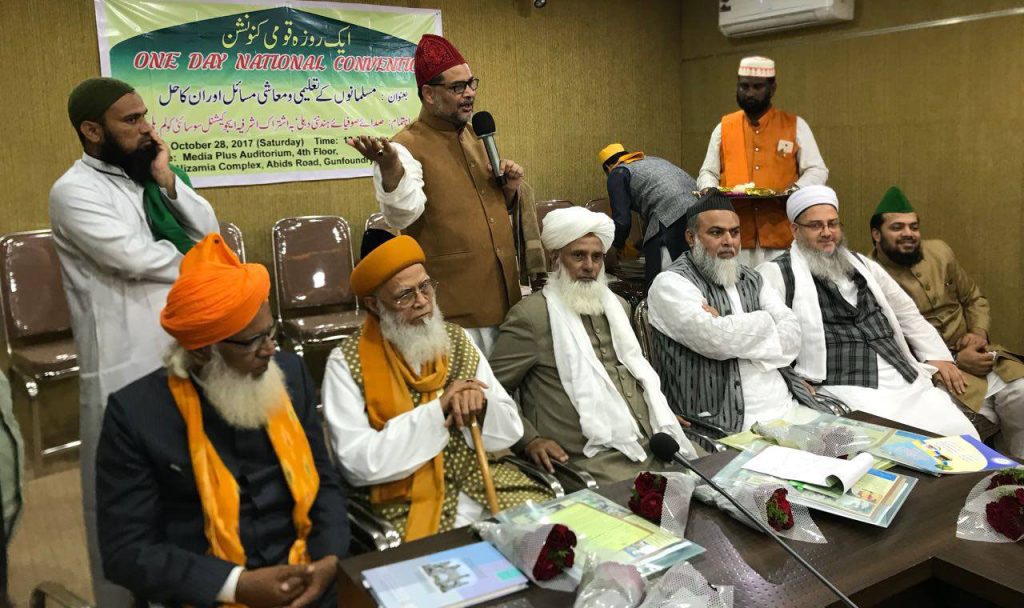
What Is Gyarvi Sharif?
Gyarvi Sharif is the gathering held on the 11th of each Islamic month in remembrance of Sheikh Abdul Qadir Jilani (RA). The word Gyarvi means eleventh. Every month has a Chhoti Gyarvi, and the great annual Gyarvi, Bari Gyarvi, falls on 11 Rabi-us-Sani, the month of his passing in 561 AH. In these gatherings Muslims recite the Holy Quran, read naat and manqabat, listen to the seerah of Ghous-e-Azam, make dhikr and Salat-o-Salam, offer Fatiha, make dua, and distribute food (langar or niyaz) among the poor and the gathering.
Why the 11th of the Month?
Biographical works record that the Sheikh himself honoured the 11th of each month in remembrance of the Holy Prophet (peace be upon him), and after his passing his devotees kept the 11th in his remembrance. Sunni scholars such as Shah Abdul Haq Muhaddith Dehlvi (RA) record elders of the Qadiri path, including Sheikh Abdul Wahab Muttaqi (RA), observing the 11th regularly as the Urs of Ghous-e-Azam. Reports describe Baghdad gatherings where people recited Quran from Asr to Maghrib, praised the Sheikh in verse, sat in loud dhikr after Maghrib, shared sweetmeats and food, and left after Isha.
Is Gyarvi Proven? The Isal-e-Sawab Answer
Gyarvi is Isal-e-Sawab: doing a good deed and dedicating its reward to the departed. Its parts are each established: reciting Quran, feeding the poor, making dua for the dead. The Quran promises that every soul earns what it strives for and teaches believers to pray for those who passed before them. Hadith literature records charity and dua benefiting the deceased. Therefore scholars rule Gyarvi permissible and rewarding, with three conditions: treat it as voluntary, never obligatory; fix no belief that the date itself is compulsory in Shariah; keep every act within Shariah, free of waste, music against modesty, mixing against decency, or borrowing on interest to show off.
What About Objections?
Some groups call every Urs and Gyarvi an innovation. Answer with calm and evidence. First, the components are all worship: Quran, dhikr, charity, dua. Second, love of the righteous and gathering for remembrance has precedent in the gatherings of the companions. Third, the great scholars and saints of India observed it for centuries. Fourth, we never claim it is obligatory like Eid or Friday. Disagreement with Adab is fine; abuse and takfir overvoluntary gatherings is not Islam. Our way remains Love for ALL, hate for none.
What Happens in a Proper Gyarvi Program
- Quran recitation with translation, even one full para distributed among readers.
- Naat and manqabat in praise of the Prophet (peace be upon him) and Ghous-e-Azam, in dignified voice without musical instruments of doubtful nature.
- Bayan of 20 to 30 minutes on one teaching: truthfulness, prayer, parents, halal earnings.
- Dhikr and Salat-o-Salam, Fatiha, and collective dua for the sick, students, travellers, the country and the Ummah.
- Langar: simple food, served to the poor first, no plastic waste left in the mosque.
Niyaz Rules Every Family Should Know
Cook from halal earnings. Keep it simple: the Sheikh himself ate simply and fed others richly. Distribute to neighbours, poor and relatives without pride. Make intention of Isal-e-Sawab for Ghous-e-Azam, all saints, and your own departed. Avoid debt for show, avoid throwing food, avoid blocking roads. A quiet niyaz with sincere hearts outweighs a loud one with cameras.
Gyarvi Across the World
From Baghdad to Bangladesh, Pakistan to Indonesia, the 11th gathers Qadiri lovers. In Bangladesh it is observed as Fatiha-e-Yazdaham with Quran, milad and tabarruk distribution, even as an institutional holiday in places. In Karnataka, JASK branches keep it monthly with the same spirit in Kannada, Urdu and English.
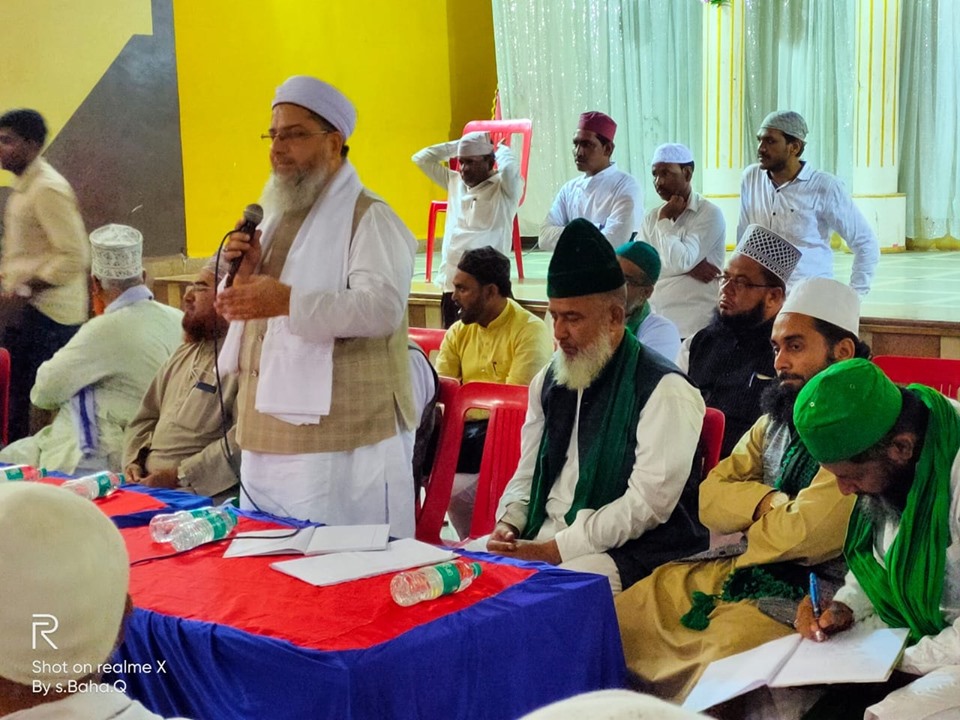
The Concept of Isal-e-Sawab in the Holy Quran and Prophetic Sunnah
The monthly celebration of Gyarvi Sharif—held on the 11th night of every lunar month, and culminating in the grand annual Urs on 11 Rabi-us-Sani—is fundamentally anchored upon the Shariah principle of Isal-e-Sawab (conveying spiritual rewards of righteous deeds to the souls of departed believers). Far from being an innovation without legal precedent, this practice enjoys universal consensus (Ijma) among all four Sunni schools of jurisprudence.
The primary evidence for conveying spiritual rewards is established across authentic Hadith literature:
- The Hadith of Sayyiduna Sa’d ibn ‘Ubadah (RA): In Sunan al-Nasa’i and Musnad Ahmad, Sa’d approached the Holy Prophet (peace be upon him) and asked: “O Messenger of Allah! My mother has passed away; which charity is most superior to give on her behalf?” The Prophet replied: “Water.” Sa’d dug a well for public benefit and proclaimed: “This is dedicated to the mother of Sa’d.”
- The Hadith of the Deceased Parents: In Sahih Muslim, a Companion asked: “O Messenger of Allah, my mother died suddenly without leaving a will. If I give charity on her behalf, will she receive the reward?” The Holy Prophet (peace be upon him) replied: “Yes, give charity on her behalf.”
- The Prophetic Sacrifice for the Ummah: In Sahih Muslim, the Holy Prophet (peace be upon him) slaughtered two rams on Eid al-Adha, stating: “One is for Muhammad and his household, and the second is on behalf of everyone in my Ummah who could not afford to offer a sacrifice.”
These explicit textual proofs demonstrate that financial charity, feeding the hungry, and reciting the Holy Quran generate immense spiritual rewards that can be gifted with complete theological certainty to departed souls.
Why Specifically the 11th Date of the Month?
A common inquiry raised by curious seekers is why the 11th date is designated for Gyarvi Sharif. Historically, Ghous-e-Azam Sheikh Abdul Qadir Jilani (RA) passed away on the evening of 11 Rabi-us-Sani, 561 AH. Following his departure, his illustrious sons—including Sheikh Abd al-Wahhab, Sheikh Isa, and Sheikh Abd al-Razzaq—along with disciples across Baghdad, gathered on the 11th of every month to recite the Holy Quran, distribute food to the poor, and supplicate for his elevated spiritual presence.
In the methodology of Islamic jurisprudence (Usul al-Fiqh), setting a regular recurring schedule (Taqyid al-Mubashir) for performing an inherently virtuous, permissible act is completely lawful. Just as institutions schedule weekly lectures or monthly administrative assemblies on fixed dates for consistency and communal participation, fixing the 11th of each month provides a structured discipline for the faithful to gather, recite Durood, listen to scholarly advice, and feed the hungry.
The Historical Continuity of Gyarvi Sharif in India
The observance of Gyarvi Sharif in India is not a recent innovation. It was actively propagated by towering luminaries across Indian history:
- Sheikh Abdul Haq Muhaddith Dehlawi (RA): The supreme Muhaddith of India during the Mughal era wrote in Ma Thabata bi’s-Sunnah: “In our land of Hindustan, there is no corner or hamlet where the 11th of the month is not celebrated with solemn devotion, Quran recitation, and charity dedicated to Ghous-e-Azam.”
- Shah Abdul Aziz Muhaddith Dehlawi (RA): The son of Shah Waliullah Dehlawi documented in Fatawa Azizi that royal princes, scholars, and ordinary citizens in Delhi observed the 11th date by distributing food and reciting Fatiha for Sheikh Abdul Qadir Jilani.
- Aala Hazrat Imam Ahmed Raza Khan (RA): Authored numerous clarifying fatwas in Fatawa Razawiyyah explaining that conducting Gyarvi Sharif with sincere intention, proper financial halal means, and observance of Shariah boundaries is a source of immense blessings and communal unity.
Refuting the Baseless Claim of Bid’ah
Certain contemporary dissenting voices allege that observing Gyarvi Sharif is a blameworthy innovation (Bid’ah Sayyi’ah). However, classical Sunni jurists, including Imam al-Shafi’i, Imam al-Nawawi, and Ibn Taymiyyah, categorized innovations into praiseworthy (Bid’ah Hasanah) and blameworthy. An act that consists entirely of halal components—reciting Quran, sending peace upon the Prophet, reminding people of piety, and feeding hungry orphans—does not become forbidden simply because it is held regularly. To the contrary, it falls directly under the Quranic command: “And cooperate in righteousness and piety” (Surah al-Ma’idah, 5:2).
The Spiritual Etiquette of Preparing and Distributing Food for Isal-e-Sawab
In the teachings of Jamat Ahle Sunnat Karnataka, the physical preparation of food for Gyarvi Sharif must conform strictly to the spiritual etiquette established by classical masters:
- Absolute Financial Purity: Funds utilized to purchase grains, meats, and sweets must originate exclusively from lawful (halal) livelihoods free from any ambiguity (Shubhah).
- Aura of Dhikr and Taharah: Cooks and volunteers should maintain ritual purity (Wudu) throughout the preparation, continuously reciting Durood Shareef, Surah al-Ikhlas, or Ayat al-Kursi over the cooking vessels so the food becomes imbued with spiritual light (Noor).
- Honoring the Dignity of the Poor: Food distribution must be conducted with deep humility and respect. Sheikh Jilani warned against throwing food carelessly or treating destitute recipients with condescension. Rather, servers should consider themselves honored to serve the guests of Allah and Ghous-e-Azam.
- Zero Food Wastage: In strict alignment with Islamic principles, every morsel must be treated with reverence. Over-serving that leads to waste is strictly condemned.
When food is prepared and distributed with these sublime intentions, it ceases to be mere physical calories; it becomes spiritual nourishment (Tabarruk) that brings healing to the body and peace to the soul.
Frequently Asked Questions
Is Gyarvi obligatory? No. It is voluntary and rewarding.
Can it be held at home? Yes. Mosque, home, school or khanqah, any clean place works.
Who may eat niyaz? The poor first, then all present. Keep it dignified.
What if someone calls it bidah? Smile, share the Isal-e-Sawab evidence calmly, and never return abuse.